
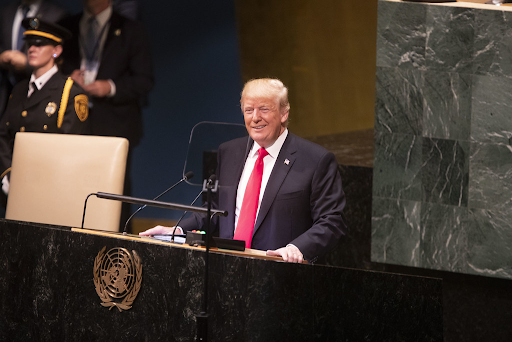
A war of words has erupted between the United States and India following President Donald Trump’s UN General Assembly speech, which ignited a fierce narrative battle on two fronts. Trump’s address was a direct challenge to India’s version of its own history and its portrayal of its current foreign policy.
The first front in this narrative war is historical. Trump’s claim to have “stopped a war” between India and Pakistan is a direct assault on India’s sovereign narrative surrounding ‘Operation Sindoor’. New Delhi maintains it made a calculated, independent decision to de-escalate, while Trump seeks to impose a narrative of American indispensability and Indian dependency.
The second, more critical front is contemporary. Trump is attempting to frame India not as a neutral nation seeking energy security, but as a “primary funder” of the Ukraine war. This is a powerful and damaging narrative that India must now actively counter on the global stage. India’s counter-narrative is one of economic pragmatism and a right to prioritize its citizens’ welfare.
This battle is not just academic; it has real-world consequences. The narrative that India is funding a war is the justification Trump uses for his punitive 50% tariffs and the threat of more to come. By winning the narrative war, he aims to win the policy war.
The Modi government, which has historically preferred to avoid public confrontations, has been dragged into this war of words against its will. It must now decide how forcefully to push back against the narratives being constructed by the leader of its most important partner, a battle that will define the relationship for the foreseeable future.