
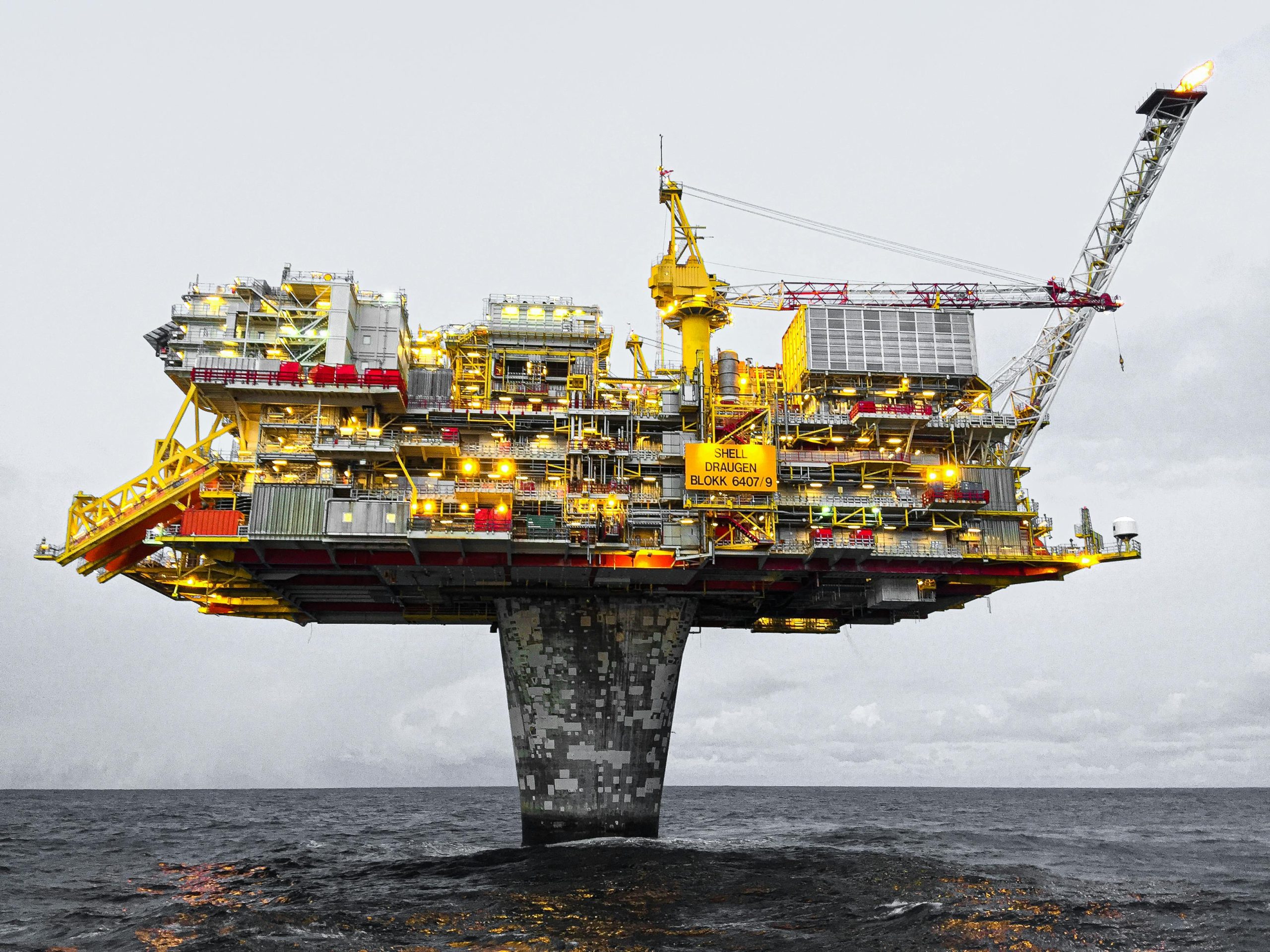
The United Nations has expressed strong disapproval of Norway’s continued oil and gas expansion, urging the nation to cease all new exploration activities. This comes as state-controlled Norwegian energy company Equinor rolls out significant new investments in offshore production across the North Sea and into the Arctic.
After years of setbacks in international ventures, Equinor’s new management is refocusing on Norwegian territory, partly driven by Europe’s need for gas following disruptions from Russia. Company officials now state that Equinor’s future lies on the Norwegian continental shelf (NCS).
Equinor recently announced a NOK 21 billion investment in subsea development in the Fram Sør area and its Troll C platform, which will be powered by electricity from shore. Equinor executive vice president Geir Tungesvik claimed this would result in “very low emissions” and contribute to “security of energy supply from the NCS to Europe.” These new projects, the largest offshore development plan in several years, will connect to existing infrastructure, increasing profitability and are expected to yield 116 million barrels of oil equivalents, with production starting in late 2029.
This marks what some are calling a “new era” for Norwegian oil and gas, centered around existing infrastructure in “mature” fields. Trond Bokn, Equinor’s senior vice president for project development, highlighted that future development on the Norwegian shelf will primarily involve “subsea expansion tied to existing infrastructure that mostly will be electrified.”
Further demonstrating this trend, Equinor also announced a NOK 13 billion investment in the third phase of the Johan Sverdrup field in the North Sea, projected to boost oil and gas recovery by as much as 50 billion barrels. Bokn asserted that Johan Sverdrup is already “one of the world’s most carbon-efficient oil and gas fields” and a contributor to stable energy supplies for Europe.
Energy Minister Terje Aasland of the Labour Party supported these plans, citing Europe’s call for Norway to remain a reliable oil and gas provider. He emphasized the necessity of continued exploration and production to prevent a sudden decline in output.
However, not all Norwegian politicians agree. Lars Haltbakken of the Socialist Left Party (SV) criticized the expansion, calling it “madness” amid record global temperatures. Further north, Equinor’s Johan Castberg field in the Barents Sea has reached full production, with most of its 220,000 barrels per day sold to Europe. A new oil strike on the Castberg field is expected to yield up to 15 million additional barrels. The Barents Sea, a less explored area, faces strong opposition to further development due to harsh conditions and environmental sensitivities.
The United Nations is a growing voice in this opposition. A recent UN report specifically called upon Norway to halt all further oil production. Elisa Morgera, responsible for the UN’s special reports on human rights and climate change, stated that wealthy “petro-states” like Norway must phase out all oil, gas, and coal production by 2030 to prevent “catastrophic” climate change. She argued these countries are responsible for not preventing climate change damage and must “defossilize” their economies by forbidding further exploration, production, and “greenwashing.”
Knut Einar Rosendahl, a professor at NMBU in Norway, emphasized the seriousness of the UN report. While he believes a total phase-out of fossil energy by 2030 is impossible due to insufficient alternative energy sources, he contended that halting all new exploration is feasible and would have a “quite modest” effect on the Norwegian economy, unlike a complete production halt.