
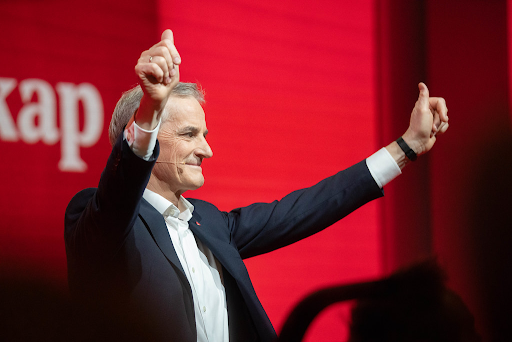
Norway’s Labour Party has won another four years in government after overcoming a strong challenge from the populist right in a closely contested national election. With nearly all votes counted, the centre-left bloc secured 89 seats in parliament, surpassing the 85-seat majority threshold, while the centre-right alliance won 80 seats.
Prime Minister Jonas Gahr Støre, who has led Labour since 2021, celebrated the victory, declaring it proof that social democracy can still triumph against the tide of right-wing populism. The Labour Party emerged as the largest force despite a surge of support for the Progress Party, which doubled its share compared to the last election.
The Conservatives suffered their worst result in two decades, while Progress leader Sylvi Listhaug acknowledged her party’s gains but conceded defeat to Støre. Analysts noted that cost-of-living concerns, debates over wealth taxes, oil fund investments, and Norway’s global positioning shaped the campaign.
Despite challenges during the campaign, Støre’s leadership, combined with renewed momentum from Labour’s youth wing and support from experienced figures, secured a comeback victory. The result leaves Norway as an exception among its Nordic neighbors Sweden and Finland, which are currently led by right-wing governments.