
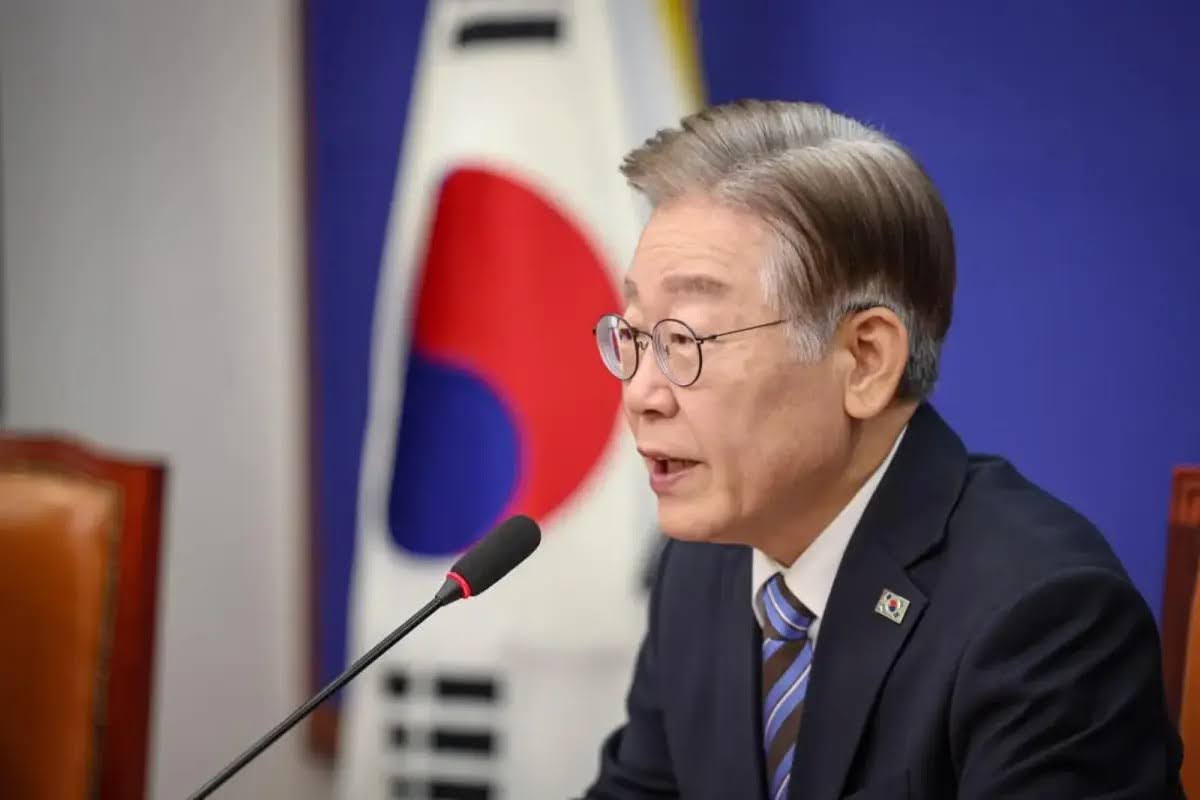
South Korea’s new President, Lee Jae-myung, officially commenced his five-year term on Wednesday, immediately setting a clear agenda focused on both inter-Korean relations and strengthening key international alliances. In his inaugural address, Lee articulated a commitment to confronting North Korean threats with “strong deterrence,” underpinned by the South Korea-U.S. military alliance. Crucially, he also pledged to “open a communication channel with North Korea and establish peace on the Korean Peninsula through talks and cooperation,” signaling a renewed push for diplomatic engagement with Pyongyang.
Beyond the Korean Peninsula, President Lee underscored the importance of bolstering a trilateral partnership with the U.S. and Japan. He emphasized the need for “pragmatic diplomacy based on national interests” to navigate global economic and security shifts, aiming to maximize South Korea’s advantages in a changing world. This comprehensive foreign policy approach seeks to enhance regional stability and secure national interests.
Domestically, Lee faces the formidable task of bridging the nation’s political divide, which deepened following the recent martial law debacle. He vowed to address these wounds and pursue a thorough investigation, signaling a commitment to national unity and accountability. Furthermore, the new administration will prioritize revitalizing the domestic economy, launching an emergency task force to combat recessionary pressures and stimulate growth.
While the U.S., Japan, and China have congratulated Lee, the specifics of his foreign policy, particularly concerning his approach to Beijing and Pyongyang, remain subject to expert scrutiny. The formidable challenges of U.S. tariff policies and North Korea’s deepening military ties with Russia will undoubtedly influence the direction of his administration’s diplomatic efforts, testing his ability to secure progress for South Korea.