
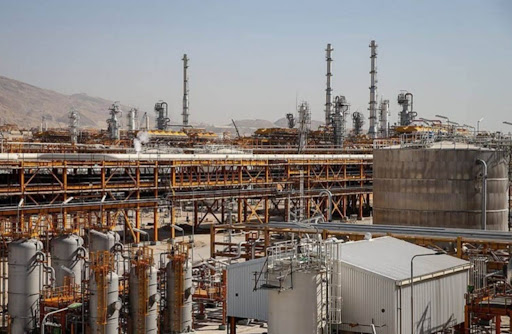
Iran took direct aim at the Gulf energy network on Wednesday, threatening imminent strikes against facilities in Saudi Arabia, the UAE, and Qatar after Israeli forces hit the South Pars gasfield. The Revolutionary Guards named specific targets and ordered evacuations, while oil markets surged toward $110 a barrel. The conflict had entered its most economically threatening phase, with the Gulf’s entire energy supply chain now in the crosshairs.
South Pars, the world’s largest natural gas reserve, is shared between Iran and Qatar and is fundamental to Iran’s energy export revenues. The Israeli strike on the field — reportedly with US consent — was the first direct attack on Iran’s fossil fuel sector in the conflict. Both countries had previously treated Iranian energy infrastructure as off-limits, understanding that striking it could trigger a catastrophic chain reaction. That line had now been crossed.
Iran’s state media listed Saudi Arabia’s Samref refinery and Jubail complex, the UAE’s al-Hosn gasfield, and Qatar’s Mesaieed and Ras Laffan facilities as imminent targets. Workers and residents were told to evacuate immediately. Governor Eskandar Pasalar of Asaluyeh said the conflict had moved into a “full-scale economic war” and described the US-Israeli strike as an act of “political suicide” with severe consequences.
Oil climbed to $108.60 a barrel, while European gas prices surged more than 7.5%. Gulf oil exports had already fallen 60% from pre-war levels, decimated by drone strikes and Iran’s Strait of Hormuz blockade. Iran had maintained its own crude shipments through the strait while choking off its neighbors’ exports, giving Tehran a powerful economic weapon throughout the conflict. The threat of strikes on Gulf energy facilities threatened to deepen the supply crisis dramatically.
Qatar’s government spokesperson warned that attacking energy infrastructure was a direct threat to global energy security and regional populations. The international community was watching with growing alarm as Iran’s retaliatory deadline approached. The conflict had arrived at a moment where energy, economics, and military action had converged in a way that threatened to reshape the global energy landscape for years to come.